
California is facing growing wildfire risks that threaten communities, natural resources, and the reliability of the electric system. Hotter temperatures, longer dry seasons, and expanding development in fire prone areas have increased the likelihood of extreme wildfires that can damage electric power infrastructure, disrupt service, and raise costs for electricity customers. State climate and energy policies call for reducing greenhouse gas emissions, protecting public safety, and strengthening the resilience of critical infrastructure, placing new demands on utilities and regulators to better understand and manage wildfire risk.
This project was designed to address these challenges by improving the science and tools used to anticipate wildfire behavior and its impacts on the electric grid. The work responds to regulatory needs identified in California Public Utilities Commission proceedings, which emphasize proactive wildfire mitigation, informed planning, and cost-effective investment in grid safety. The project brought together researchers, utilities, and public agencies to develop more accurate and timely ways to assess wildfire risk over both short and long timeframes.
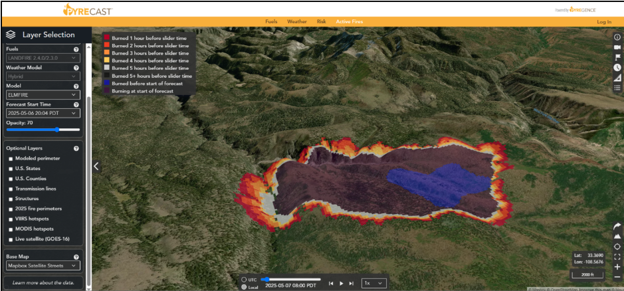
Key outcomes include improved methods to identify dangerous fire weather, better understanding of how dead and dry vegetation affects fire behavior, and the development of a publicly accessible forecasting platform that provides near term wildfire risk and spread information. The project also produced long range projections showing how wildfire patterns may change under future climate and land management conditions, supporting long term grid planning and climate resilience.
Together, these results provide utilities, regulators, and policymakers with actionable information to reduce wildfire impacts, support safer grid operations, and help meet California’s energy, conservation, and climate goals while protecting ratepayers and communities.
Research described by this agreement was administered by CEC with ratepayer funds from the Electric Program Investment Charge (EPIC) under the auspices of the California Public Utilities Commission (CPUC). This agreement’s Final Report describes original, energy-related research that contributes to California’s Fifth Climate Change Assessment (Fifth Assessment). The Fifth Assessment comprises a broad portfolio of research and synthesis reports that address California-specific research needs and knowledge gaps related to climate change. To ensure scientific rigor, Fifth Assessment research was peer-reviewed. This research effort was peer reviewed through external journal publications.
Report Information
CCCA5-CEC-Energy-EPC-18-026
Lead Authors: J. Shane Romsos and David Saah, Ph.D.; Spatial Information Group, LLC
Coordinating Commission Agreement Manager: David Stoms, Ph.D. and Alex Horangic